Nikkor-Q(·C) 13.5cm f/3.5
Nippon Kogaku · Nikon S + LTM + Contax RF · 1950 · Sonnar type
Also known as: Nikkor 13.5cm f/3.5 · Nikkor 135mm f/3.5 · Nikkor-Q.C 13.5cm f/3.5 · Nikkor-Q·C 13.5cm f/3.5 · Nikkor-QC 13.5cm f3.5 · Nikkor-Q 13.5cm f/3.5 · Nikkor-Q 135mm f/3.5 · Nikkor-Q.C 135mm f/3.5 · Nippon Kogaku 13.5cm f/3.5 · Nippon Kogaku 135mm f/3.5 · 13.5cm f3.5
Variants & identification
| Variant | Mount | Years | Serial ranges | Production |
|---|---|---|---|---|
| Chrome (1951 baseline) | Nikon S | 1951 | 50060101–50060430 (first batch, code 5006) 253513–256111 ('Tokyo' beauty ring) 256233–257095 ('Nippon Kogaku Japan' ring, stops to f/16) 257430–265493 (stops to f/32, wide data ring without holes) 253201–265556 (f/32, thin data ring with two holes; overlaps earlier blocks) | ~30,000 total across all mounts and barrel styles (Pacific Rim 'nearly 30,000'; NHS Kiu–Rotoloni registry ~30k) vs ~28,720 summed by serial spans (~330 first batch + ~27,270 main run + ~1,120 final batch) — per-mount S/LTM split unpublished |
| Black "new style" (July 1956) | Nikon S | 1956–1962 | 264187–268025 (fine knurling, infinity marked INF.) 267279–272502 (broad knurling, infinity marked ∞) 272734–275537 (plain Nikkor-Q, ·C dropped) 275901–278849 (J.PAT. 188,481 engraving; lowercase 'J.Pat' to ~2763xx) 278933–280782 (J.PAT., to 1961) ~282001–283120 (final 1962 batch) | — |
| Leica screw mount | LTM | 1951 | — | — |
| Contax RF (C-marked) | Contax RF | — | 253942 263736 267906 | — |
How to tell them apart
Chrome (1951 baseline):
- Marked Q·C, engraved 13.5cm; chrome-over-brass barrel, ~520g early / ~485g later
- First batch marked MIOJ with the 'Tokyo' beauty ring; 'Nippon Kogaku Japan' from ~256233
- 43mm filter thread
Black "new style" (July 1956):
- Lighter black aluminum barrel, ~405g
- Early black examples show fine knurling with infinity marked INF., later ones broad knurling with the ∞ symbol
- Engraving drops the ·C (plain Nikkor-Q) from ~272734
- Final 1962 batch is marked 135mm rather than 13.5cm, with a dual feet/m focus scale
Contax RF (C-marked):
- C-marked mount
- Leica screw mount: Built in the same serial batches as the S-mount lens from the first MIOJ batch onward — LTM examples are documented inside the shared chrome and early-black ranges, with no separate serial blocks and no per-mount production split published. Batches are S-mount-only from ~275901 (the J.PAT-engraving era, ~1957 on), implying LTM production ended around 275xxx.
- Contax RF (C-marked): Physically confirmed C-marked examples inside the shared serial batches; no factory Contax production figure is known. A single Exakta-mount example, serial 262914, is also documented.
Serial-range notes
- 50060101–50060430
- First batch of ~330, January 1951, marked MIOJ with the 'Tokyo' beauty ring; the 5006 prefix is the factory order number. ~520g chrome-over-brass.
- 253513–280782
- Main run, April 1951 to 1961, ~27,270 lenses in serial batches shared between Nikon S and Leica screw mounts; chrome-over-brass (~520g, then ~485g) gives way to black aluminum (~405g) from July 1956, and the minimum aperture changes from f/16 to f/32 at ~257430.
- ~272734
- ·C dropped from the engraving — plain Nikkor-Q from here.
- ~275901
- Batches S-mount-only from here (J.PAT. 188,481 engraving era, ~1957 on), implying Leica-screw production ended around 275xxx.
- ~282001–283120
- Final batch, 1962, ~1,120 lenses; marked 135mm rather than 13.5cm, with a dual feet/m scale.
- 262914
- Documented Exakta-mount example.
Specifications
- Formula
- Sonnar type
- Designed by
- Murakami Saburo (村上三郎)
- Construction
- 4 elements / 3 groups
- Aperture range
- f/3.5
- Min. focus
- 1.5 m
- Filter
- 43 mm
- Years manufactured
- 1950–1962
- Country
- Japan
What reviewers say
- Richard Haw (blog) — A tough, solid-brass survivor that still delivers at ~70 years old — sharp in the center wide open, nicer by f/4, with pleasing bokeh from the round preset iris and a natural rendering he credits to the four-element formula — but it flares terribly with the sun just outside the frame, so the (often lens-priced) hood is essential.
- Ichigo Amaki (雨樹一期, Sunrise Camera blog) (blog) — Renders with a soft, dreamy veil of light rather than clinical sharpness — "a lens that improves your photography" because it demands deliberate light and composition — better as a second or third old lens than a first. via machine translation — corrections welcome
- yokokanno (晴れ時々ジャズ、雨のちカメラ) (blog) — On a Leica M Monochrom (Typ 246) the L-mount version's rendering is remarkably good — contrast and sharpness are extraordinary by f/8 — though wide open it can't match a modern APO-Telyt 135mm f/3.4. via machine translation — corrections welcome
Optical formula — Sonnar type
History
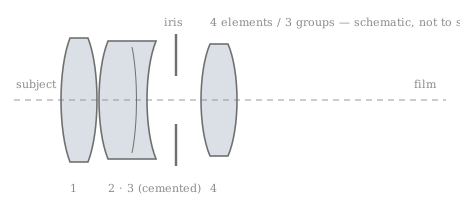
The Nikkor-Q(·C) 13.5cm f/3.5 was the longest lens a Nikon rangefinder could focus, and the standard telephoto of the S system for its entire mature life. Saburo Murakami (村上三郎), who had designed the 13.5cm f/4 it replaced, reworked his own formula a fraction faster: the design was completed in December 1950 — not 1949, a date that still circulates — and the first batch of roughly 330 Made-in-Occupied-Japan lenses followed in January 1951 under factory order 5006 (Rotoloni). A Sonnar-type telephoto of four elements in three groups behind a 43mm filter thread, it then stayed in the catalog for over a decade, to a final batch in 1962 — around 30,000 lenses across all mounts, which puts it among the most-produced S-Nikkors of any focal length.
Its predecessor carried real history. The 13.5cm f/4, designed by Murakami in autumn 1946 as a close derivative of the Zeiss Sonnar, was one of Nippon Kogaku’s original postwar consumer lenses, and by Nikon’s own account it was the lens David Douglas Duncan bought after tests convinced him it outperformed his German glass — part of the Korean War-era reporting that made Nikkor’s reputation. But the f/4 was short-lived: Murakami’s f/3.5 recalculation superseded it within a few years and became, in Nikon’s words, “a standard NIKKOR lens for the S Series.” At 135mm it sat right at the practical limit of what a rangefinder could focus accurately, which is exactly why every serious S-system kit ended with one.
The production run reads like a compressed history of 1950s Nippon Kogaku. Serial batches were shared between Nikon S and Leica screw mounts from the first MIOJ batch onward — Leica-screw examples are documented inside the same ranges, and no per-mount split was ever published; batches appear S-mount-only from ~275901 (the J.PAT-engraving era, ~1957 on), implying screw-mount production ended around 275xxx. Along the way the beauty ring changed from “Tokyo” to “Nippon Kogaku Japan,” the minimum aperture went from f/16 to f/32, and in July 1956 the ~520g chrome-over-brass barrel gave way to the black “new style” in aluminum at ~405g. The ·C was dropped from the engraving at ~272734, and the final 1962 batch is marked 135mm rather than 13.5cm. C-marked Contax-mount examples are physically confirmed (serials 253942, 263736, 267906), and even a lone Exakta example (262914) is documented, though no factory figures for either exist. The ~30,000 total triangulates from three directions: Pacific Rim’s “nearly 30,000,” the NHS Kiu–Rotoloni registry’s 30k, and about 28,720 summed from the known serial spans.
The design outlived the system that created it. When Nikon moved to the F, the Nikkor-Q 13.5cm f/3.5 Auto of 1959 was, per Richard Haw, largely based on this lens with a slightly revised formula — the start of a 135mm f/3.5 line that Nikon kept in production through the Ai-S version of the early 1980s. Shooters today find much of what the 1950s buyers did: a natural, low-element-count rendering that is sharp centrally even wide open and excellent stopped down, undone only by era-typical flare when the sun sits just outside the frame — the deep original hood was, and remains, essential equipment.
This history is AI-written, from the sources listed at the foot of the page. Where the record is silent it says so rather than filling the gap — but no human wrote these sentences.
Example photos
More sample photos elsewhere
- maryland_photos — album "Nippon Kogaku 13.5cm 3.5QC (S-mount)": 15 photos shot with the S-mount 13.5cm f/3.5 Q.C on a Nikon S2 (film) and adapted Nikon Z6 (all rights reserved)
- marc.l'esperance — 8 photos tagged nikkorq135mm, each captioned "Shot with 1953 Nikkor 13.5cm f/3.5 LTM rangefinder lens on Sony FF" — abstract/nature work showing the lens's rendering (all rights reserved)
- jore0902 — album "Nikkor-QC 13.5cm F3.5 with A7": 8 sample photos of the rangefinder-era Nikkor-Q.C 13.5cm f/3.5 adapted to a Sony A7 (all rights reserved)
These photographers keep all rights to their work — enjoy it at the source.
Sample photo wanted — shot with a Nikkor-Q(·C) 13.5cm f/3.5? We'd love to feature it (with credit).
Live listings
Asking price, USD: a median of $120 across 32 fixed-price listings on 2026-10-19 (middle half $89–$230). Tracked since 2026-09-06, 10 days: down 10% from $130.
By day
| Date | Median | Middle half | Listings |
|---|---|---|---|
| 2026-10-19 | $120 | $89–$230 | 32 |
| 2026-10-18 | $120 | $89–$230 | 32 |
| 2026-10-17 | $120 | $89–$230 | 32 |
| 2026-10-16 | $130 | $91–$230 | 33 |
| 2026-10-15 | $130 | $90–$230 | 28 |
| 2026-09-21 | $150 | $89–$230 | 29 |
| 2026-09-19 | $140 | $100–$230 | 25 |
| 2026-09-18 | $140 | $100–$230 | 25 |
| 2026-09-11 | $130 | $80–$200 | 28 |
| 2026-09-06 | $130 | $80–$200 | 28 |
Asking prices from the listings scanned, not sales; junk-flagged rows and auction lots excluded; other currencies are not converted.
- [MINT] Nikon Nikkor-Q 13.5cm / 3.5 Black Lens Barrel From JAPAN
- Nikon 135mm f3.5 Nikkor-Q Lens 135/3.5 #G874
- 🎦VIDEO👀🌟Near MINT🌟 Nikon NIKKOR-Q 135mm F/3.5 From JAPAN
- Nikkor RF 13.5cm/3.5 #261368, chrome, Ex
- VINTAGE NIKON NIKKOR-Q 135mm F3.5 LENS - prime portrait lens
- 🎦VIDEO👀🌟Near MINT🌟 Nikon NIKKOR-Q 135mm F/3.5 From JAPAN
- Nippon Kogaku Nikkor-Q 13.5cm (135mm) f3.5 Lens No. 730127 135/3.5 #G539
- Nikon LTM Nikkor 13.5cm/3.5 #257488, chrome, Ex-
- Nikon NIKKOR-Q 135mm F3.5 [S]
- NIKON NIKKOR-Q 135MM F3.5 Objektiv Vintage Kamera Zubehör
- Nikon Nippon Kogaku Nikkor Q.C. 13.5cm f3.5 Lens for Nikon S Cameras #47933
- Nikon Nippon Kogaku Nikkor Q.C. 13.5cm f3.5 Lens for Nikon S Cameras #38349
- [Exc+5] Nikon NIKKOR-Q.C 13.5cm F/3.5 L39 Leica Rangefinder Lens From JAPAN #90
- *Exc+5* Nikon Nikkor Q 135mm F/3.5 Telephoto Lens S Mount for RF Camera From JPN
- Near Mint Nippon Kogaku Nikkor-Q 13.5cm 135mm f/3.5 Lens for Nikon S Mount Japan
- Obiettivo manuale Nikkor Q 13.5cm F3.5
- [Fast neuwertig] Nikon NIKKOR-Q.C. 13,5 cm 135 mm f/3,5 Teleobjektiv für S...
- Nippon Kogaku Nikkor-Q.C 13.5cm 135mm f/3.5 L39 LTM Lens [Exc+5 / Read]
- Nikon Nippon Kogaku Black Nikkor-Q 135mm 13.5cm f3.5 RF S Lens S# 274xxx w/Case
- Nikon Nikkor-Q C 13.5cm F3.5 Nikon Rangefinder Lens
Show 44 more listings
- [Exc+5] Nippon Kogaku Nikkor-Q.C 13.5cm 135mm f/3.5 L39 LTM Lens From JAPAN
- [Exc+4] Nikon Nippon Kogaku NIKKOR-Q.C 13.5cm 135mm f3.5 Objektiv S mount aus...
- Nippon Kogaku Nikkor-Q.C 13.5cm 135mm f/3.5 L39 LTM Objektiv [Exc+5 / Lesen]
- [Exc+5] Nippon Kogaku Nikkor-Q.C 13,5 cm 135 mm f/3,5 L39 LTM Objektiv aus JAPAN
- Obiettivo manuale Nikkor Q 135mm f3.5
- [Near MINT] Nikon NIKKOR-Q.C 13.5cm 130mm f/3.5 Us Seller W External Viewfinder
- Nikon Nikkor-Q.C 13.5cm 135mm f3.5 S Mount Rangefinder Lens [EXC-]
- Nikon Nikkor Q 13.5cm 135mm f3.5 S mount Rangefinder Lens in Case - 401
- Nikon Nippon Kogaku NIKKOR-Q.C 13.5cm 135mm f3.5 Lens S mount fromJAPAN #270399
- NIKON NIKKOR-Q 13.5CM F3.5 Objektiv für Nikon
- NIKKOR-Q 13.5CM F/3.5 NIKON S MOUNT RANGEFINDER LENS
- NIKON LENS NIKKOR-Q 13.5CM F3.5 Used
- NIKON LENS NIKKOR-Q.C 13.5CM F3.5 Used
- Nikon Nikkor Q 13.5cm 135mm f/3.5 Nippon Kogaku Japan S-Mount w/Case From Japan
- NIKON MF 135mm f/3,5 Nikkor-Q - SNr: 752942
- Nippon Kogaku Nikkor-Q.C 135mm F/3.5 Nikon S Monture
- Objectif Nikon Nikkor - Q.C f/3.5 - 135mm #261549. Monture M39 à vis. (LTM)
- NIKON OBJEKTIV NIKKOR-Q 13,5CM F3,5 Gebraucht
- NIKON OBJEKTIV NIKKOR-Q.C 13,5CM F3,5 gebraucht
- NIKON Nikkor-Q 135mm f/3,5 - SNr: 279853
- NIKKOR-Q.C 1:3.5 F=13.5CM RF NIPPON KOGAKU 3.5/135MM RANGEFINDER LENS
- Lens Nikon 13,5cm f3,5 Nikkor-Q.C Nippon-Kogaku” Silver Lens for Nikon Contax RF
- CLA'd [MINT] Nikon Nikkor Q.C QC 135mm f/3.5 Lens S Mount Black Barrel JAPAN
- Nikon Nippon Kogaku Nikkor-Q.C 3.5/13,5cm
- Lens for Nikon S NIKKOR-Q 135mm f3.5 Used
- 【N Mint】Nippon Kogaku Nikon Nikkor-Q C 13.5cm F3.5 Black S Mount from Japan
- NIKON NIKKOR-Q 13,5 CM F3,5 Objektiv für Kameras der S-Serie
- Nikon Nikkor Q.C 3,5/13,5cm Nippon Kogaku Leica Screw Mount NEEDS CLEANING
- Nikon Nikkor-q.c 13.5cm 135mm f3.5 Lens S mount Nippon Kogaku Tokyo
- [MINT] Nikon Nippon Kogaku Nikkor-Q.C 13.5cm f/3.5 Lens Rengefinder From JAPAN
- RARE Nikon Nikkor-Q 13.5cm f/3.5 Nippon Kogaku 135mm PAT.PEND Lens #1451
- Lens for NIKON S NIKKOR-Q 13.5CM F3.5 Used
- [N MINT w/Viewfinder] Nikon Nikkor Q.C 13.5cm 135mm f3.5 Old Lens L39 From JAPAN
- RARE!] E.P. Nippon Kogaku NIKKOR-Q.C 13.5cm f/3.5 Black Lens w/ E.P. Finder
- 13,5cm f3,5 Nikkor Q.C Nippon Kogaku Black + Finder Lens for Nikon Contax RF Mi
- 13,5cm f3,5 Nikkor Q.C Nippon Kogaku Chrom + Finder Lens for Leica Screw 39
- Objektiv für NIKON S NIKKOR-Q 13,5CM F3,5 gebraucht
- Nippon Kogaku Japan Nikkor-Q 3.5/13.5 cm RF Clean glass
- Nikon Nikkor-q.c 13.5cm 135mm f3.5 Lens S mount Nippon Kogaku Tokyo
- Early Rare Pat.Pend 13.5cm f/3.5 Nikkor-Q Nippon Kogaku Lens 9 Blade Iris Nikon
- Nippon Kogaku Nikkor-Q 3.5/13.5 cm RF Clean condition
- Nippon Kogaku Nikkor-Q 135mm F3.5 - Black / Nikon S Mount — SN 282484
- NIKON Junk S Mount Objektiv NIKKOR-Q.C 13,5 CM/3,5
- 作例あり】NIKKOR-Q・C 13.5cm F3.5☆ニコン ニッコール 135mm☆ライカLマウントレンズ L39 スクリューマウント
Buying from Yahoo! Auctions outside Japan. It is a domestic marketplace: sellers ship within Japan, and most will not register an overseas buyer. A proxy service bids on your behalf, receives the item and forwards it, for a fee and a wait. Buyee, Jauce and ZenMarket each accept a Yahoo auction number directly. Listed alphabetically for information — none is recommended over another, and none of these is an affiliate link.
Listings updated 2026-10-19. Links go to the shop or marketplace that carries the item.