Micro-Nikkor 5cm f/3.5
Nippon Kogaku · Nikon S + LTM · 1956 · Xenotar type, 5e/4g
Also known as: Micro-Nikkor 50mm f/3.5 · Micro-Nikkor·C 5cm f/3.5 · Micro-Nikkor.C 5cm f/3.5 · Micro-NIKKOR-C 5cm f3.5 · Micro Nikkor 5cm f3.5 · Nippon Kogaku Micro-Nikkor 5cm f/3.5 · R-NIKKOR·C 5cm f/3.5
Variants & identification
| Variant | Mount | Years | Serial ranges | Production |
|---|---|---|---|---|
| Nikon S (1956) | Nikon S | 1956 | 523001–524406 (ONE serial block shared with the LTM version — LTM serials interleaved, not split out) | 901 (of 1,188 total; Rotoloni — the split carried identically by Grays of Westminster, Wide Angle, and en.wiki) vs Pacific Rim's looser "~1,500 both mounts"; an observed serial span of 1,406 sits between |
| Leica screw mount (1956) | LTM | 1956 | — | 287 (of 1,188 total; Rotoloni — same Grays of Westminster / Wide Angle / en.wiki chain) — RARER than the S-mount version |
How to tell them apart
Nikon S (1956):
- No focusing unit of its own — focuses on the camera body's helicoid, and cannot focus closer without bellows or extension rings
- Collapsible barrel — collapsing is not for close focus but for high-magnification bellows work, where the lens functions like an enlarger lens
- Notch in the aperture ring accepts a rare dedicated hood that allows aperture changes while collapsed
Leica screw mount (1956):
- Own focusing helicoid: 3 ft normal range, extending down to ~1.5 ft — decoupled from the camera's rangefinder at close range
- New-style "hill-and-dale" focusing ring otherwise seen only on early F-mount Nikkors, the W-Nikkor 3.5cm f/1.8, and the last W-Nikkor 3.5cm f/2.5
- Click-stopped aperture ring — still a novelty in the mid-1950s
- Leica screw mount (1956): Serials interleaved within the single shared block rather than given their own range — documented LTM example 523191 sits inside the "Micro·C" batch. The variant shooters and adapters prefer: its own helicoid makes it the only version that focuses close on its own.
Serial-range notes
- 523001–523002
- Prototypes engraved "R-NIKKOR·C" (1956) — renamed before sale to avoid confusion with Roentgen (X-ray) optics.
- 523014–523704
- "Micro·C" engraving batch.
- 523900–524406
- Late batch engraved plain "Micro" (no ·C).
- 523191
- Documented LTM example inside the "Micro·C" batch — evidence that both mounts share one interleaved serial block rather than separate ranges.
Specifications
- Formula
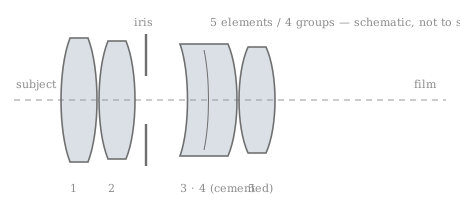
- Xenotar type, 5e/4g
- Construction
- 5 elements / 4 groups
- Aperture range
- f/3.5–f/22
- Diaphragm blades
- 7
- Min. focus
- 0.45 m
- Weight
- 145 g
- Filter
- 34.5 mm (Nikon S (1956))
- Years manufactured
- 1956
- Country
- Japan
- Original price
- $199.50 (today $2,300) — $30 over the 5cm f/1.4
What reviewers say
- Richard Haw (blog) — The best-performing 50mm Nikkor of the rangefinder era — sharp wide open right into the corners with as-good-as-no distortion and smooth, even bokeh; flare from the 1950s coating is its biggest weakness, and at collector prices he doesn't recommend it to casual shooters.
- Richard Haw (blog) — The best construction he has seen on any small 5cm rangefinder Nikkor — "even the tiny screws are exquisite" — and exceptionally sharp, but with no helicoid of its own it can't focus close without bellows or extension rings, so he recommends the S-mount version to collectors; the LTM version is the one to actually shoot or adapt.
Optical formula — Xenotar type, 5e/4g
History
No lens in the Nikon rangefinder system had a stranger commission than the first Micro-Nikkor. Initiated by Professor Zyun Koana (小穴) of the University of Tokyo, it was built not for photographers but for the Japanese written language: dense Kanji text demanded more resolving power than the Western microfilm systems of the day could deliver. Nippon Kogaku’s answer was a 5cm lens guaranteed to resolve 100 lines per millimeter at the center wide open, and around 200 in tests: it out-resolved the film of its day. Mass production began on 4 May 1956 — prototype drawings date back to April 1952, and Nikon’s Japanese text says it was productized in October 1956 — and only 1,188 were ever made.
The design came from inside Koana’s orbit: Zenji Wakimoto (脇本) proposed the structure and Azuma (東) finished it — a Xenotar type, five elements in four groups, deliberately computed in older, non-lanthanum glass. The prototypes, serials 523001–523002, were engraved “R-NIKKOR·C” — renamed Micro-Nikkor to avoid confusion with Roentgen (X-ray) optics. Koana himself supplied the proof of concept with a 1955 stunt: the entire 70-page novella Takekurabe (たけくらべ) photographed onto a single 125×75mm microcard at a reduction of 1/13.5.
Production tells a collector’s story. The Rotoloni figures put the run at 1,188 total — 901 in Nikon S mount, 287 in Leica screw mount, a split now carried everywhere from Grays of Westminster to Wikipedia — against Pacific Rim Camera’s looser “~1,500 both mounts”; the observed serial span of 1,406 sits between. The two mounts share one interleaved serial block rather than separate ranges: “Micro·C” engraving through 523704, plain “Micro” from 523900, with a documented LTM example (523191) sitting inside the ·C batch. The S-mount version has no focusing unit at all — it rides the camera body’s helicoid — while the rarer LTM version carries its own, focusing to 3 feet normally and down to 1.5 feet with the helicoid extended, decoupled from the rangefinder at close range; on both, the collapsible barrel exists for high-magnification bellows work, the optics optimized for 1:12 reproduction. At $199.50 it cost $30 more than the 5cm f/1.4, in a 145g package.
The design’s afterlife outlasted the whole rangefinder system: stretched to 55mm for the F mount, the same basic five-element structure defined Micro-Nikkors for decades. Richard Haw, whose repair series on the 50/55mm Micro-Nikkors took him a decade to complete, calls it the best-performing 50mm Nikkor of the rangefinder era — sharp wide open into the corners, essentially distortion-free, let down only by its 1950s-era coating in backlight — and the best-constructed small 5cm rangefinder Nikkor he has handled: “even the tiny screws are exquisite.” His practical verdict is the one buyers still face: the S-mount lens is for collectors, and the LTM lens, with its own helicoid, is the one to shoot.
This history is AI-written, from the sources listed at the foot of the page. Where the record is silent it says so rather than filling the gap — but no human wrote these sentences.
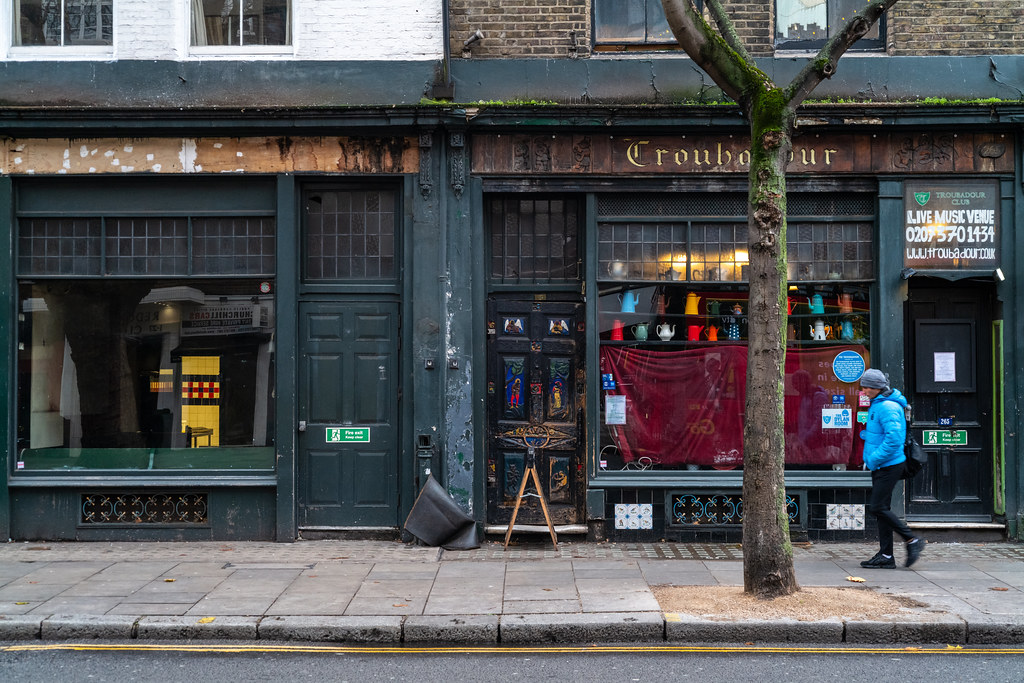
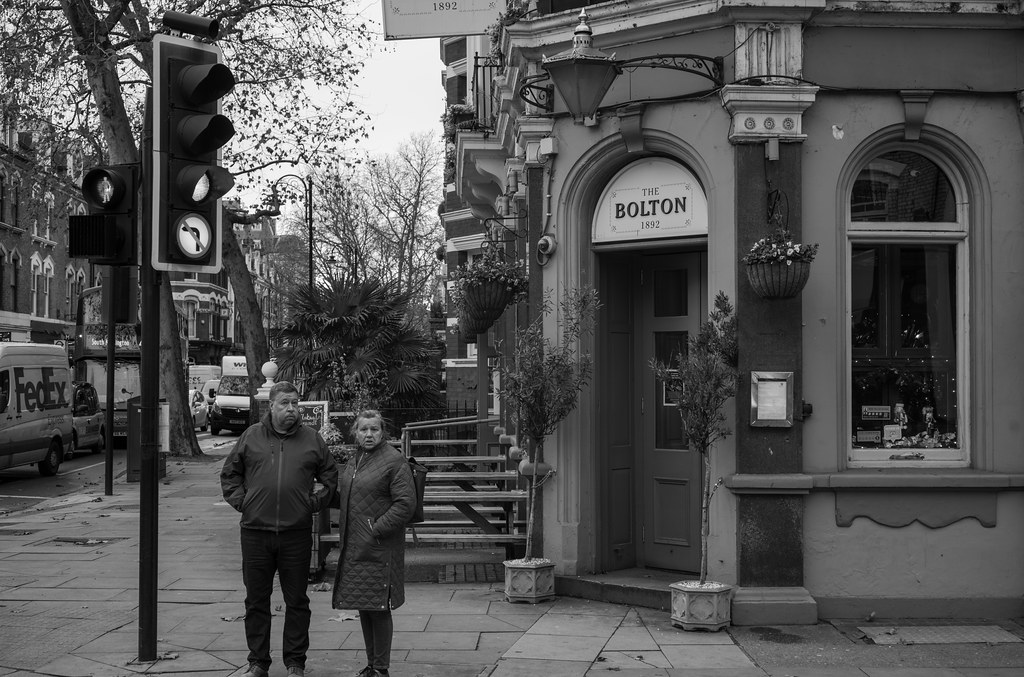
Example photos

More sample photos elsewhere
- Tim Doherty's Watertown, MA street/transit shots with the Micro-Nikkor 5cm f/3.5 RF lens — all-rights-reserved sample photo (Flickr)
- Shusuke Urabe's sample frame — Micro-Nikkor 5cm f/3.5 on a Leica M Edition 60 (Typ 240), all rights reserved (Flickr)
- Chris Bail's "Highlands" — XPAN film frame digitized through the S-mount Micro-Nikkor 5cm f/3.5 on a Leitz BEOON copy stand with a Leica M9, showing the lens in its designed close-up/copy role (Flickr, all rights reserved)
These photographers keep all rights to their work — enjoy it at the source.
Sample photo wanted — shot with a Micro-Nikkor 5cm f/3.5? We'd love to feature it (with credit).
Live listings
Asking price, USD: a median of $2,000 across 5 fixed-price listings on 2026-10-19 (middle half $1,900–$2,500). Tracked since 2026-09-06, 10 days: up 7% from $1,900.
By day
| Date | Median | Middle half | Listings |
|---|---|---|---|
| 2026-10-19 | $2,000 | $1,900–$2,500 | 5 |
| 2026-10-18 | $2,000 | $1,900–$2,500 | 5 |
| 2026-10-17 | $2,000 | $1,900–$2,500 | 5 |
| 2026-10-16 | $2,000 | $1,900–$2,500 | 5 |
| 2026-10-15 | $1,900 | $750–$2,500 | 4 |
| 2026-09-21 | $2,000 | $1,900–$2,500 | 5 |
| 2026-09-19 | $2,000 | $1,900–$2,500 | 5 |
| 2026-09-18 | $2,000 | $1,900–$2,500 | 5 |
| 2026-09-11 | $1,900 | $750–$2,000 | 4 |
| 2026-09-06 | $1,900 | $750–$2,000 | 4 |
Asking prices from the listings scanned, not sales; junk-flagged rows and auction lots excluded; other currencies are not converted.
- Nikon Rangefinder 50mm 5cm f3.5 Micro-Nikkor-C lens-EARLY 7 Blade head+READ+RARE
- Nippon Kogaku Micro-Nikkor 50mm F3.5 - Nikon S — SN 523968
- [MINT Case] Nippon Kogaku Micro-NIKKOR C 5cm 50mm f3.5 Lens Nikon S from JAPAN
- Nippon Kogaku Micro-Nikkor 50mm F3.5 - Nikon S (94-96%new)
- 【Near MNT】Nikon Micro-NIKKOR-C 5cm f/3.5 (S-Mount) From Japan
- Good condition NIKON Nikon Japan Optical Micro NIKKOR C 5cm F3.5 Micro Nikkor S
- Nippon Kogaku Micro-Nikkor 50mm F3.5 - Nikon S — SN 523349
Listings updated 2026-10-19. Links go to the shop or marketplace that carries the item.